
How to reduce termite risk in Cosmo City during summer
Termite risk in Cosmo City rises in summer with warmth and moisture. Here is what actually lowers the risk, and the signs worth an inspection.
Serving Cape Town and Johannesburg
Inspection-based service with clear reporting
Written for real decisions
These articles are meant to help a reader understand the issue more clearly before choosing the next step.
Local context
The content is framed around Cape Town and Johannesburg conditions wherever local detail matters.
Useful without being padded
The goal is clarity and practical value, not empty volume.
Useful next steps
If the article helps you identify the problem, the next move should be clear and practical.
How to reduce termite risk in Cosmo City during summer
Termite risk in Cosmo City rises in summer because warmth and moisture speed up activity, and because timber, garden offcuts, and outdoor storage are often left in contact with soil.
The property that manages moisture, storage, and early warning signs properly carries far less risk than the one that waits for visible damage.
Why summer raises termite risk in Cosmo City
Warmth and moisture are the two conditions termites need most, and summer supplies both.
- Warm, humid conditions speed up termite activity and colony growth
- Damp soil around foundations gives termites easy access to timber
- Garden offcuts, cardboard, and stored timber close to the structure create shelter
- Older timber elements lose resistance faster once moisture is present
Termite pressure is not evenly distributed. It concentrates wherever moisture and untreated timber meet, which is why one property can carry real risk while a neighbour has almost none.
Moisture control matters more than treatment alone
Fixing leaks and drainage removes the conditions termites rely on, before treatment is even needed.
- Repair leaking taps, gutters, and downpipes promptly
- Improve drainage so ground around the foundation doesn't stay damp
- Keep irrigation and sprinklers from soaking walls directly
- Check under-house and crawl space areas for standing moisture
If the ground around the structure stays damp, the property is already carrying more risk than it should, regardless of how recently it was treated.
Storage habits that increase termite risk
Timber and cardboard stored against the structure give termites shelter and hide the early signs.
- Move timber offcuts and stacked boards away from exterior walls
- Store cardboard and packaging off the ground and away from the structure
- Clear old cupboards and furniture that sit directly against timber framing
- Keep firewood stacks well clear of the house
Storage discipline is one of the few termite risk factors a homeowner can fix immediately, without waiting for an inspection.
Early warning signs to check for
Mud tubes, hollow timber, and doors that suddenly bind are signs worth a proper inspection, not a wait-and-see approach.
- Mud tubes running up foundations, walls, or piping
- Timber that sounds hollow when tapped
- Bubbling or flaking paint with no obvious water source
- Doors or windows that suddenly stick or bind
- Discarded wings near windowsills or light fittings
None of these signs confirm an active infestation on their own, but together they're serious enough to justify a proper look rather than being watched from a distance.
What a proper termite inspection covers
A licensed inspection tells you whether the risk is active, historic, or simply a warning worth acting on.
- Full assessment of foundations, roof voids, and timber structures
- Moisture and drainage conditions around the property
- Identification of active activity versus old, treated damage
- A clear recommendation matched to what the inspection finds
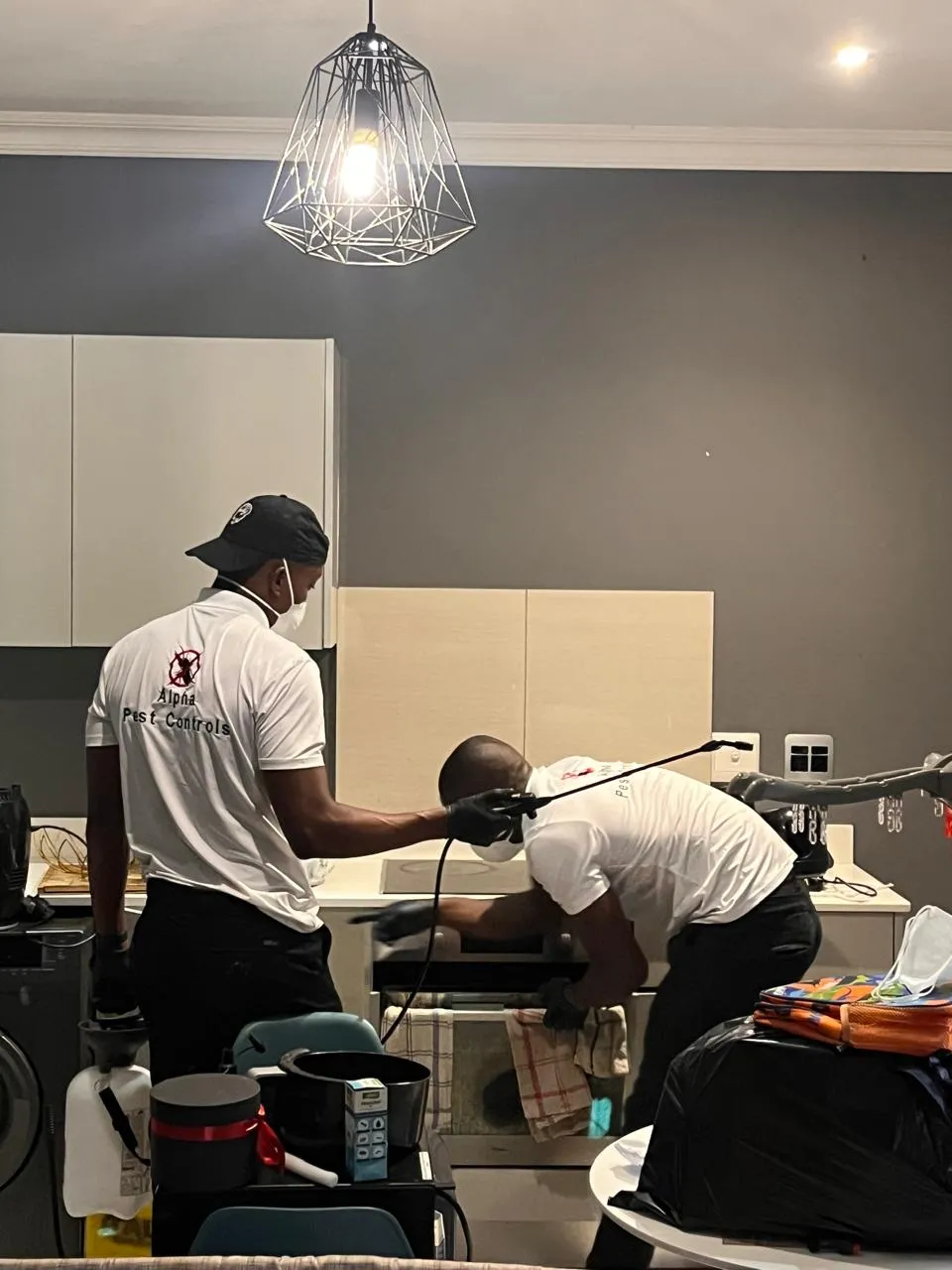
At Alpha Pest Controls, every termite job starts with inspection, because a treatment plan is only as good as the assessment behind it.
Frequently Asked Questions About Termite Risk in Cosmo City
How often should a Cosmo City home be inspected for termites?
In summer, an annual inspection is a reasonable baseline for most homes, with a sooner check if any warning signs appear.
Can I treat termites myself?
Store-bought products can reduce visible activity but rarely address the source. Professional treatment paired with moisture and storage correction gives a much more durable result.
Does moving stored timber away from the house really make a difference?
Yes. Removing shelter and food sources close to the structure is one of the simplest ways to lower risk immediately, alongside professional treatment.
What is the first sign homeowners usually notice?
Mud tubes on foundations or piping, and doors or windows that start sticking without an obvious cause.
Should I check my insurance policy for termite cover?
Termite damage is often treated as a maintenance issue and excluded by insurers, so it is worth checking your specific policy directly rather than assuming it is covered.